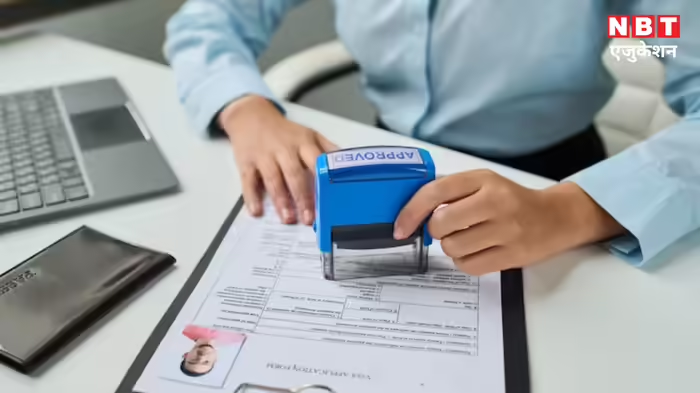
Millions of Indians are currently working in the United States under an Employment Authorization Document (EAD), commonly known as a work permit. A significant policy change by the U.S. government has now reduced the validity of certain work permits from five years to just 18 months, affecting a large group of workers.
New USCIS Rules
Under the new policy announced by the U.S. Citizenship and Immigration Services (USCIS), many categories of EAD holders—including refugees, asylum seekers, and employment-based green card applicants—will receive a significantly shorter work authorization period. Previously, individuals could legally work in the U.S. for up to five years on an EAD. Now, they will be limited to 18 months.
USCIS stated that this reduction aims to enhance national security and allow for more frequent background checks. By shortening the validity period, the agency can better detect fraud and identify individuals who may pose a security risk.
Government Statement
USCIS Director Joseph Edlow said, “Reducing the maximum validity of employment authorization ensures that individuals working in the U.S. do not pose security threats or promote anti-American ideologies. Recent incidents underscore the importance of regular checks on foreign nationals to identify potential threats.”
Who Will Be Affected?
Immigration experts warn that the new rule will create widespread disruption, particularly for thousands of Indians on the employment-based green card waiting list. These work permits allow them to continue working while their adjustment-of-status applications—such as transitioning from an H-1B visa to a green card—are pending.
Immigration lawyer Kripa Upadhyay told The Times of India, “The change will primarily impact Indian applicants awaiting green cards. This includes investors applying under the I-526/EB-5 program, as well as spouses or parents of U.S. citizens who are adjusting status based on approved I-140 petitions.”
H-1B visa holders currently waiting for adjustment of status may face additional challenges. They will need to apply for EAD renewal well in advance to avoid any employment interruptions. Upadhyay emphasized, “Working without valid authorization is illegal in the U.S., so losing EAD validity could result in losing the legal right to work.”
Currently, this policy does not affect H-1B visa holders already employed under valid work authorization, as their permission to work remains intact.
Discover more from SD NEWS agency
Subscribe to get the latest posts sent to your email.