
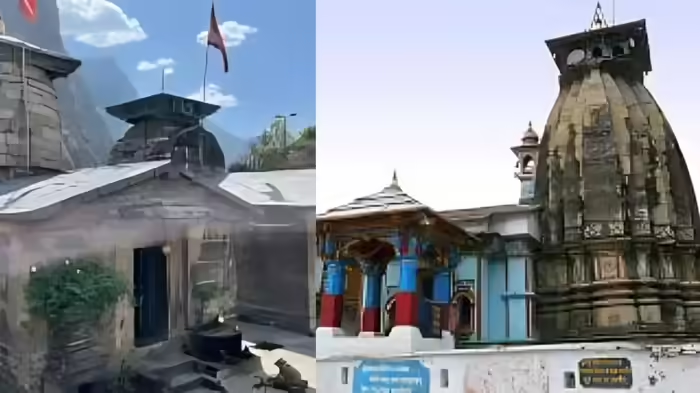
Dehradun, Uttarakhand: The gates of Badrinath Temple will officially close today, marking the beginning of the six-month winter period when the Char Dham pilgrimage remains inaccessible at the main shrines. During this time, devotees can continue worship at the winter abodes of the deities, as the Uttarakhand government promotes winter pilgrimage tourism to ensure year-round spiritual and economic engagement.
Ceremonial Closing of Badrinath Temple Gates
The gates of Badrinath will close at 2:56 PM, with the temple adorned with 10 quintals of flowers for the auspicious occasion. Since 21 November, rituals had already begun at Badrinath, including the closing of gates at the Ganesh Temple, Adi Kedareshwar, and the Adi Guru Shankaracharya seat, followed by the cessation of Vedic recitations for the winter.
Special worship at Mata Lakshmi Temple was performed, where the temple priest invited the goddess to reside in the Badrivishal Pandukeshwar temple, the winter abode of Lord Badrinarayan. This allows pilgrims to continue their devotion during the off-season.
Winter Abodes Across the Char Dham
The winter abodes for the Char Dham are:
- Yamunotri: Kharshali village
- Gangotri: Mukhba village on the banks of the Bhagirathi river
- Kedarnath: Omkareshwar Temple, Ukhimath
- Badrinath: Yog Dhyan Badri Temple, Pandukeshwar
The winter relocation ensures that pilgrims can continue worship despite heavy snowfall and harsh conditions, which typically make direct access to the main shrines challenging from November to March.
Boosting Tourism and Pilgrimage
The Uttarakhand government aims to maintain tourism and pilgrimage throughout the year, linking winter pilgrimage with adventure tourism. Last year, 77,093 devotees visited winter abodes during the four-month period, generating Rs 12.82 crore in revenue for the Garhwal Mandal Vikas Nigam. The government plans to create circuits connecting winter pilgrimage sites with winter tourism destinations such as Tungnath, Deoria Tal, Triyuginarayan, and Auli, offering both spiritual and recreational experiences.
Advantages of Winter Pilgrimage
The winter pilgrimage provides devotees with a serene, crowd-free environment, scenic snow-covered landscapes, frozen waterfalls, and peaceful surroundings for meditation and worship. Unlike the summer Char Dham season, which sees heavy congestion and noise, the winter journey allows for spiritual immersion and adventure tourism in nearby valleys and hill stations.
Historical and Religious Significance
The relocation of deities to winter abodes ensures uninterrupted worship. For example:
- Yamunotri’s goddess is moved to Kharshali, 10 km away from the main temple.
- Gangotri’s goddess resides in Mukhba, 27 km from the main shrine.
- Kedarnath’s idol is moved in a ceremonial procession to Omkareshwar Temple, Ukhimath.
- Badrinath’s deity is transferred to Yog Dhyan Badri, Pandukeshwar, a site over 1,200 years old, where devotees continue to receive blessings during winter months.
With this winter pilgrimage initiative, Uttarakhand not only preserves religious traditions but also promotes tourism, employment, and sustainable spiritual experiences throughout the year.