
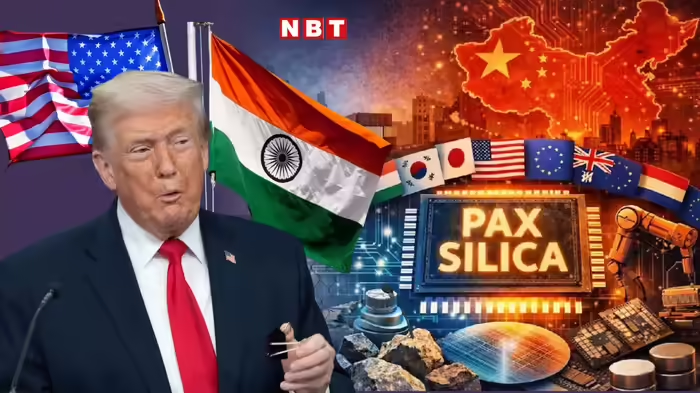
New Delhi: The United States has invited India to join its Pax Silica initiative, a strategic effort aimed at strengthening the supply chains for critical minerals and semiconductors. The initiative seeks to ensure uninterrupted production in modern manufacturing sectors, particularly in sensitive technologies and infrastructure. India has not yet taken a final decision and is carefully evaluating the potential benefits and risks before committing.
Ensuring Critical Mineral Supply Chains
According to industry reports, India is keen to be part of this emerging global framework but is cautious regarding policies linked to artificial intelligence and other technologies that could limit its strategic autonomy. The key advantage of joining Pax Silica lies in securing reliable supply chains for raw materials, which are vital for modern industries and technological advancement.
Reducing Dependence on China
Participating nations in Pax Silica have pledged to collaborate on semiconductor design, production, packaging, logistics, and transport, addressing challenges in computing, energy grids, and power generation. The initiative aims to prevent any single country from gaining unfair advantages in critical infrastructure sectors—a clear reference to China. Currently, India sources nearly 30% of its chips from China, and joining Pax Silica could help reduce this dependency.
Timing and Diplomatic Considerations
India was not part of the initial phase of the initiative. Countries such as Japan, Singapore, South Korea, the UK, Australia, Israel, and Greece signed the summit declaration on December 12, with the Netherlands, the UAE, and Qatar joining later. The US formally extended an invitation to India in January, indicating careful deliberation over India’s role. Notably, key semiconductor leaders like Taiwan have yet to officially join, and the European Union participated only as a guest, reflecting its own industrial strategy.
Strategic Challenges for India
While securing critical minerals and semiconductors is essential, India must weigh its participation against maintaining independent policymaking. Upcoming negotiations with the European Union on a free trade agreement (FTA) and collaborative projects across 27 EU countries will also influence India’s decision. Policymakers stress that India must ensure uninterrupted supply chains without compromising its sovereign strategic choices or becoming overly bound by international agreements.
Joining Pax Silica thus presents India with both a major opportunity to strengthen its technology and manufacturing sectors and a significant challenge in safeguarding national interests.